
Dynamic Application Security Testing (DAST)
DAST is a crucial component of modern application security, designed to identify vulnerabilities in web applications during runtime.
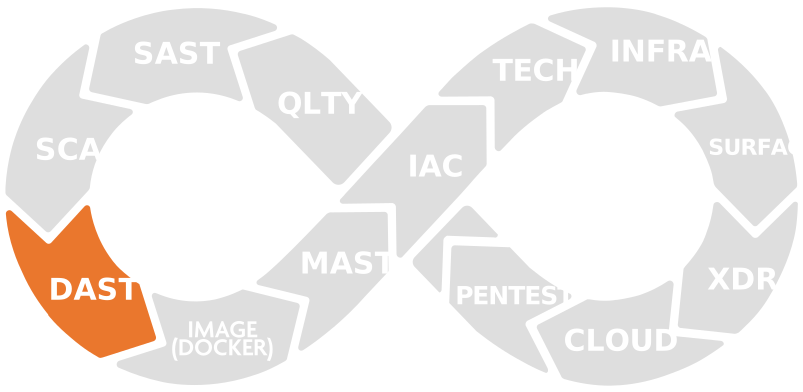
What is DAST?
Dynamic Application Security Testing (DAST) analyzes web applications in their running state to identify vulnerabilities and security weaknesses. Unlike Static Application Security Testing (SAST), which examines source code, DAST interacts with the application as an external attacker would — giving a practical, realistic assessment of its security posture.
This approach lets DAST detect issues such as SQL injection, cross-site scripting (XSS) and other runtime vulnerabilities that may not be evident from static code analysis.
Testing your app from the outside in
DAST sends automated, simulated attacks to the running application, mimicking real attackers. It needs no access to the source code — it tests from the outside-in, analyzing responses and behavior to identify flaws.
- 1
Crawling the Application
DAST maps out the application's structure, discovering pages, forms and inputs that could be potential entry points for attacks.
- 2
Simulating Attacks
It launches a series of pre-defined attack patterns against those entry points — injecting malicious code or manipulating inputs — to see how the application responds.
- 3
Analyzing Responses
Based on the responses, DAST identifies vulnerabilities like input-validation errors, authentication weaknesses and improper error handling.
- 4
Reporting Findings
It generates a comprehensive report detailing the vulnerabilities discovered, their severity and recommendations for remediation.
Catch runtime flaws before they reach production
DAST is particularly valuable for ensuring the security of web applications in a production-like environment. A common use case is the late stages of the development lifecycle, when the application runs in a staging environment that closely mirrors production — letting teams find and fix vulnerabilities before go-live. DAST is also used within CI/CD pipelines to provide ongoing security assessments as new features and updates are deployed.
Frequently asked questions
What is Dynamic Application Security Testing (DAST)?
DAST analyzes a web application in its running state, interacting with it as an external attacker would to find runtime vulnerabilities and security weaknesses.
How is DAST different from SAST?
SAST examines source code; DAST tests the running application from the outside in — so it catches runtime issues that static analysis may miss.
Does DAST need access to source code?
No. DAST tests the application externally, without access to the source code.
What vulnerabilities can DAST find?
Runtime issues such as SQL injection, cross-site scripting (XSS), input-validation errors, authentication weaknesses and improper error handling.
Can DAST run in CI/CD?
Yes. DAST can run in CI/CD pipelines to provide ongoing security assessments as new features and updates are deployed.
Test your running app like an attacker would
Find exploitable runtime vulnerabilities across your attack surface — before someone else does.