
Quality Analysis (QLTY)
Quality Testing is a vital process in the software development lifecycle — ensuring your applications meet the highest standards of performance, reliability and user experience.
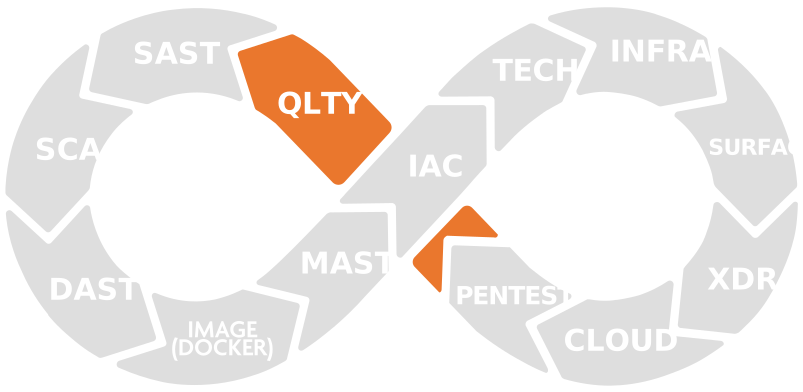
What is QLTY?
Quality Testing is the process of evaluating software to confirm it meets its specified requirements and delivers a flawless user experience. It goes beyond finding bugs: it assesses performance, usability and compatibility so the final product is of the highest quality.
Rainforest provides an end-to-end Quality Testing solution that helps developers identify and fix issues early in the development process — reducing the risk of defects reaching production.
A systematic path to higher-quality software
Quality Testing follows a series of systematic procedures that evaluate the software under a range of conditions — from design through continuous integration.
- 1
Test Design
Detailed test cases are designed from the software requirements and use cases, covering both functional and non-functional aspects for comprehensive coverage.
- 2
Test Execution
The test cases run in a controlled environment, applying functional, performance, usability and other testing as the software is put through its paces.
- 3
Report & Tracking
Any defects found are logged, categorized by severity and tracked. Rainforest integrates with popular bug-tracking tools so issues are managed efficiently.
- 4
Regression Testing
After defects are fixed, regression testing confirms the new changes haven't introduced additional issues — keeping the software stable as it evolves.
- 5
Continuous Integration (CI)
The solution plugs into CI/CD pipelines for continuous, automated testing across the lifecycle — enabling faster release cycles and higher-quality software.
Ship with confidence, release after release
Quality Testing is essential for organizations that prioritize a superior user experience and high standards of software performance. A common use case is the final stages of development, where it confirms the application is ready for deployment. It is equally critical where software is updated frequently, since continuous Quality Testing maintains stability and performance over time. By building Rainforest’s Quality Testing into your process, you detect and resolve issues early, minimize downtime, and deliver software that meets the expectations of your users and stakeholders.
Frequently asked questions
What is Quality Analysis (QLTY)?
Quality Analysis, or Quality Testing, evaluates software to confirm it meets its specified requirements and delivers a flawless user experience — assessing performance, usability and compatibility, not just finding bugs.
How does Rainforest's Quality Testing work?
Through a systematic flow: test design, test execution in a controlled environment, defect reporting and tracking, regression testing after fixes, and continuous integration into your CI/CD pipeline.
Does QLTY integrate with CI/CD pipelines?
Yes. It plugs into CI/CD pipelines for continuous, automated testing throughout the development lifecycle — enabling faster release cycles and higher-quality software.
Does it integrate with bug-tracking tools?
Yes. Defects found during testing are logged, categorized by severity and tracked, and the solution integrates with popular bug-tracking tools.
When should Quality Testing be used?
It is most valuable in the final stages of development to confirm readiness for deployment, and in environments where software changes frequently, where continuous testing maintains stability and performance over time.
See Quality Analysis in your pipeline
Detect and resolve issues early — and ship software your users can rely on.