
Static Application Security Testing (SAST)
SAST is an essential practice in application security, focusing on identifying vulnerabilities within the source code early in the development process.
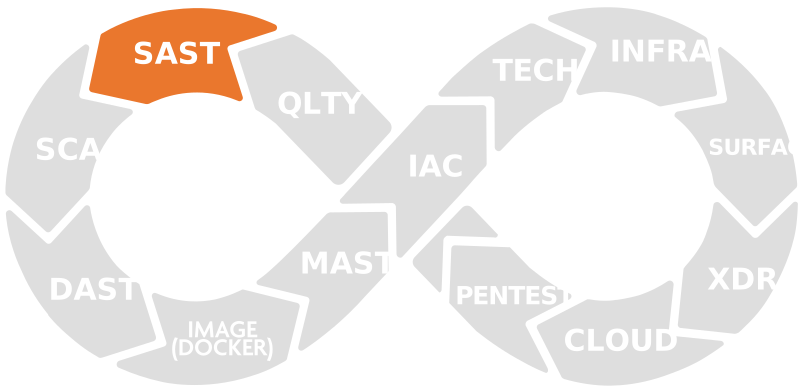
What is SAST?
Static Application Security Testing (SAST) is a method of security testing that examines the source code, bytecode or binary code of an application to detect vulnerabilities. Unlike Dynamic Application Security Testing (DAST), which tests running applications, SAST focuses on the code itself — allowing developers to find and fix security issues early in the software development lifecycle (SDLC).
SAST can detect a wide range of vulnerabilities — including SQL injection, cross-site scripting (XSS), buffer overflows and more — before the application is ever executed.
Deep analysis of your code — without running it
SAST analyzes the source code or compiled versions of the application without executing the software, examining its structure, syntax and logic to uncover potential security risks. The process typically follows these steps.
- 1
Code Parsing
The SAST tool first parses the source code to understand its structure, identifying all functions, variables and data flows.
- 2
Rule Application
It then applies a set of predefined security rules and patterns to the code, looking for known vulnerabilities such as insecure coding practices, poor input validation and inadequate error handling.
- 3
Data Flow Analysis
SAST analyzes how data moves through the application, detecting issues like improper data handling that could lead to security breaches.
- 4
Result Generation
After analysis, the tool produces a detailed report highlighting the vulnerabilities found, their potential impact and recommendations for fixes.
- 5
Continuous Security
SAST integrates into CI/CD pipelines, enabling continuous scanning of code as it is developed — ensuring security is built into every stage of the process.
Secure applications, from the first line of code
SAST is most effective when used early in the development lifecycle, making it invaluable for developers who want to build secure applications from the ground up. A typical use case is during the coding and unit-testing phases, where SAST scans catch vulnerabilities as the code is being written, letting developers address issues immediately. It is also crucial for organizations following DevSecOps practices, as it provides automated, continuous security feedback directly within the development environment — helping maintain a high standard of code quality and security throughout the project.
Frequently asked questions
What is Static Application Security Testing (SAST)?
SAST is a security testing method that examines an application's source, bytecode or binary code to detect vulnerabilities — without running the software — so developers can find and fix issues early in the software development lifecycle.
How is SAST different from DAST?
Unlike DAST, which tests a running application from the outside, SAST analyzes the code itself. This lets it catch issues earlier, before the application is ever executed.
What vulnerabilities can SAST detect?
A wide range, including SQL injection, cross-site scripting (XSS), buffer overflows, insecure coding practices, poor input validation and inadequate error handling.
Does SAST integrate with CI/CD pipelines?
Yes. SAST integrates into CI/CD pipelines for continuous scanning as code is developed, so security is built into every stage of the process.
When should SAST be used?
As early as possible — during the coding and unit-testing phases — so vulnerabilities are caught as code is written. It is especially valuable for teams practicing DevSecOps.
Catch vulnerabilities in your source, early
Build security into every commit — before your code ever runs.